


A real EPC credential, not a panel import licence
Wattstead's team already manages project delivery, civils and HSE on Nigerian cell sites. Every Wattstead plant is built by people who have built for MTN, Airtel and Globacom.
Wattstead finances, builds and operates rooftop and ground-mounted solar-plus-storage plants for Nigerian businesses and towers — then sells the electricity back as a multi-year power-purchase agreement. You pay for kWh delivered. We carry the capex, the risk and the O&M.
The model
The default solar transaction ships a kit and asks the customer to run a power plant. Wattstead's product is the kWh — built, financed and operated end-to-end by us, paid by you per delivered unit.
Every new plant is an EPC job, sized to the customer's load curve and built by the same project management, civils and HSE capability the team already runs on Nigerian tower sites.
EPC cash funds overhead, hardens reputation, and produces a contracted reference. It is the entry. It is not the prize.
Long-tenor PPAs — 15, 20, 25 years — convert finished plants into contracted revenue. Margin, not kit. Indexed. Recurring. Tenants and counterparties credit it.
As the book grows, Wattstead starts to trade at a multiple of EBITDA. The EPC machine is the feedstock.
Sectors
The beachhead gives Wattstead credibility on capex-heavy energy infrastructure. Every expansion sector below is buying the same plant, under the same PPA — by a team their MNOs already know.
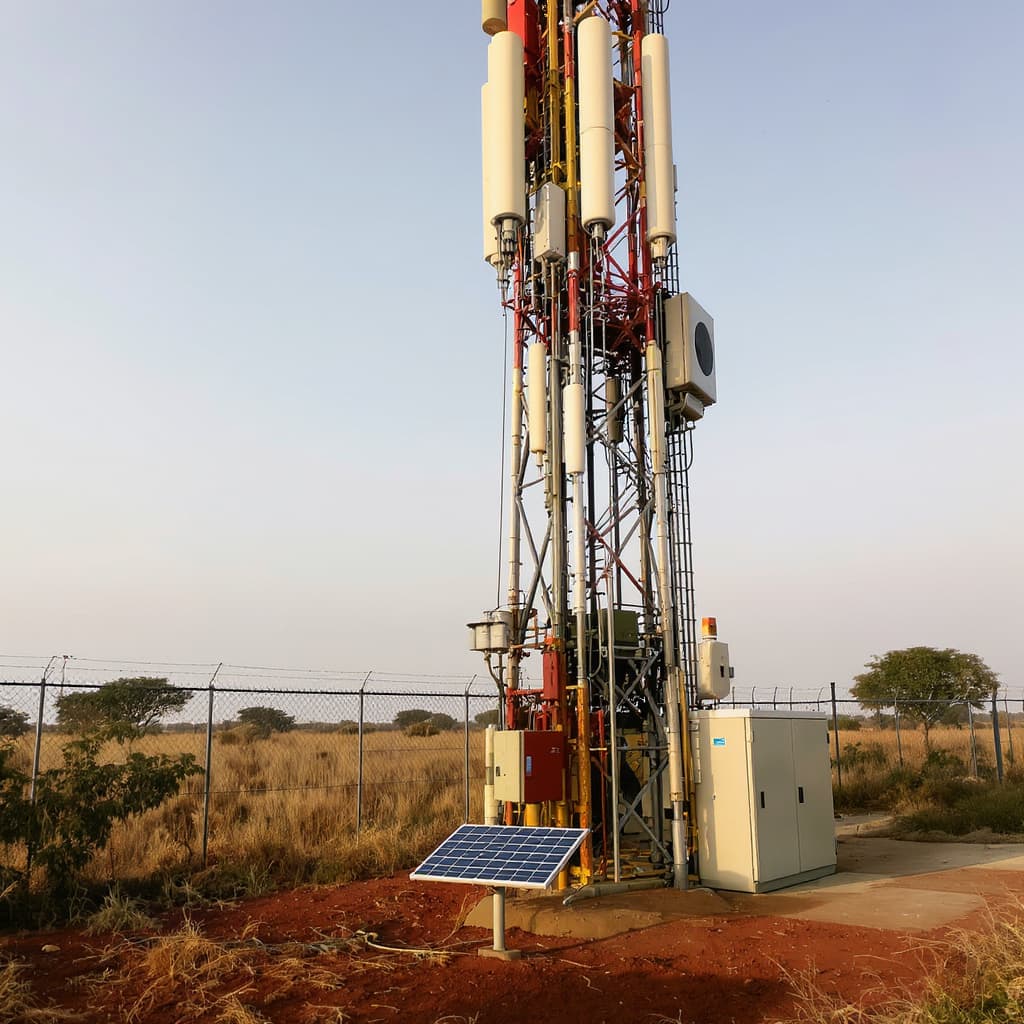
Convert MTN, Airtel and Globacom base sites from diesel- and genset-fed to solar-battery hybrids. Wattstead enters here first — the same civils, HSE and project management that already run on those sites.
Continuous-daylight production loads that today generate at four times the grid tariff and live with the capex headache of a substation upgrade.
24-hour anchor loads with high outage cost: refrigeration, HVAC, clinical equipment. Solar-plus-storage absorbs the day load and rides through the evening peak.
Drying, milling and cold-chain operations in peri-urban and rural corridors where grid reliability collapses and diesel dominates. Wattstead plants ship a contracted, bankable power line.
From signed bill to switched-on plant
Twelve months of the customer's electricity bills, a load profile, the site, the roof or ground footprint, and the grid connection we can rely on.
A tailored power-purchase agreement: capacity, availability, indexed tariff, escalation terms, exit clauses, and the uptime SLA — signed before any panel goes up.
Wattstead finances and builds the plant — rooftop, ground-mount, or hybrid — with the same PM, civils and HSE the team already runs on Nigerian tower sites.
Wattstead owns, monitors and maintains the asset for the tenor of the PPA. The customer pays for kWh delivered, like any other utility bill — and starts saving from day one.
Why Wattstead
Wattstead's team already manages project delivery, civils and HSE on Nigerian cell sites. Every Wattstead plant is built by people who have built for MTN, Airtel and Globacom.
EPC cash pays for overhead today. A growing book of long-tenor power-purchase agreements becomes the contracted asset base — a portfolio that compounds as capacity scales. Operationally, but also on paper.
Wattstead is paid to deliver kWh, not to ship modules. Plant sizing, dispatch logic and battery duration are chosen against the customer's load curve, not the inverter catalogue.
One email to start
We'll come back with an indicative sizing and a path to a signed PPA. Wattstead qualifies every site against the same load-and-grid checklist — no exceptions.
Contact Wattstead at contact@wattstead.com for solar-plus-storage power-purchase agreements across Nigerian commercial and industrial sectors.